Held at the Source: How Japanese Supplier Quality Gates Are Quietly Delaying Your US Market Entry

When a shipment from a Japanese supplier does not arrive on schedule, the instinct among US procurement teams is to look outward—toward port congestion, freight capacity, or customs clearance. Rarely does the investigation turn inward, toward the supplier's own facility. Yet for a growing number of US importers, the most consequential delays in their Japan supply chains are occurring well before a container ever reaches Yokohama or Kobe. They are happening on the factory floor, in inspection rooms, and inside approval workflows that most Western buyers have never been invited to observe.
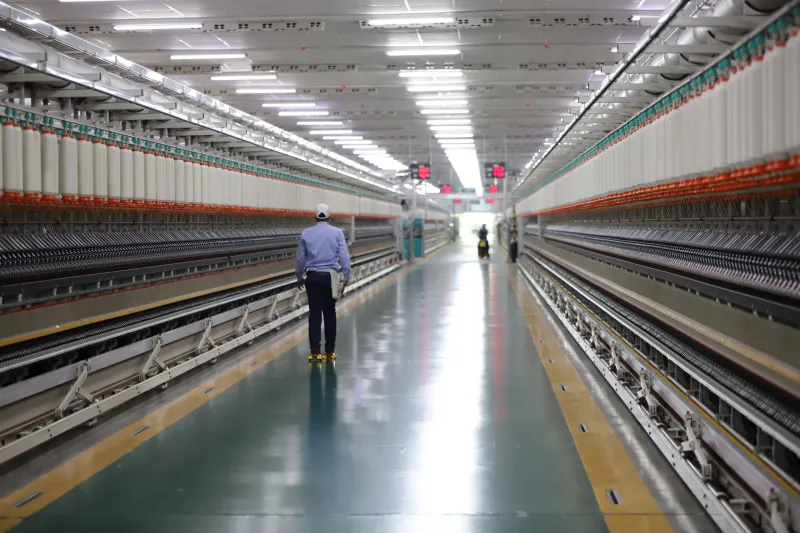
This is the operational reality of sourcing from Japanese manufacturers: quality is not a final checkpoint. It is a continuous, multi-layered process embedded into production itself. And while that commitment to precision is a primary reason companies source from Japan in the first place, the same system that produces exceptional goods can become an invisible bottleneck when it intersects with the compressed go-to-market timelines that US retailers and distributors now demand.
The Architecture of the Japanese Quality Hold
Japanese manufacturing culture draws heavily from the concept of monozukuri—the art of making things—which treats quality as a matter of professional and institutional pride, not merely a compliance requirement. Within this framework, most mid-to-large Japanese suppliers operate what are effectively internal quality tribunals: cross-functional review bodies that must authorize production lots before they are cleared for shipment.
These internal gates typically include dimensional inspections, materials verification, cosmetic grading, and in many cases, functional testing performed on a sampled percentage of each production run. What makes this system opaque to outside observers is that the timelines for these reviews are rarely formalized in supplier contracts. They are understood internally as standard practice, but they are seldom communicated to buyers as a variable that affects the committed ship date.
The result is a structural information gap. A US importer may receive a production completion confirmation and reasonably assume the goods are ready to ship. In reality, the supplier's quality team may still be working through a multi-day inspection cycle. If an anomaly is detected—even a minor one by Western standards—the lot may be placed on an internal hold pending a disposition review. That review can take days. In some cases, it triggers a partial rework, extending the timeline by a week or more.
Real-World Scenarios: When the Clock Stops Without Warning
Consider a US consumer electronics distributor that had established a reliable quarterly replenishment cycle with a mid-tier Japanese components manufacturer in Aichi Prefecture. Over eighteen months, shipments arrived within a consistent three-day window of the agreed schedule. Then, ahead of a major Q4 retail push, a shipment was delayed by eleven days. The supplier's initial communication cited "final preparation activities"—a phrase that offered little operational clarity.
Upon deeper investigation facilitated by a local logistics partner, it emerged that the supplier's internal inspection team had flagged a surface-finish variation on a subcomponent. The variation was within the tolerance specifications agreed upon in the purchase order, but it fell outside the supplier's own, more stringent internal standard. Rather than ship and disclose, the supplier initiated a quiet rework process—a decision made entirely within their own quality hierarchy, without notifying the US buyer.
This pattern is not uncommon. A US industrial equipment importer sourcing precision-machined parts from Osaka reported a similar experience: a two-week delay caused by an internal failure-mode review triggered after a single part in a batch of five hundred failed a drop test that was not part of the agreed inspection protocol. The supplier's quality engineers considered the test standard; the buyer had never been told it existed.
Why Transparency Is Not the Default
Understanding why Japanese suppliers do not proactively communicate these delays requires some cultural context. Japanese business culture places significant value on delivering a finished, resolved situation rather than surfacing a problem mid-process. Informing a buyer that a quality hold is underway can feel, from the supplier's perspective, like an admission of failure—something to be avoided until the matter is resolved internally.
This disposition is reinforced by long-standing trading relationships in which Japanese suppliers have historically managed quality concerns autonomously and successfully. The expectation, deeply embedded in the supplier's operational culture, is that the buyer will receive a conforming product and need not be involved in the process of ensuring that conformity.
For US importers accustomed to real-time supply chain visibility and proactive exception management, this creates a fundamental mismatch in communication expectations—one that rarely surfaces during the commercial negotiation phase and only becomes apparent when a deadline is missed.
Building Transparency Into the Supplier Relationship
Addressing this challenge requires a deliberate and structured approach. The following framework offers US importers a practical path toward greater pre-shipment visibility without compromising the supplier relationship.
Formalize the inspection timeline in the purchase order. Rather than specifying only a ship date, negotiate a production completion date and a separate inspection clearance date. This creates a documented window for quality review and establishes a shared expectation that the buyer will be informed if that window is at risk.
Request access to the supplier's internal inspection checklist. Most Japanese suppliers will share this documentation if asked directly and respectfully. Understanding what criteria the supplier applies—beyond the agreed purchase order specifications—allows the buyer to anticipate where holds are most likely to occur.
Establish a named quality liaison on the supplier side. Rather than routing all communication through a sales representative, identify a direct contact within the supplier's quality or production planning team. This individual can provide earlier and more accurate status updates when a hold is initiated.
Introduce milestone-based status reporting. Agree with the supplier on two or three defined checkpoints during the inspection cycle at which they will provide a written status update. This normalizes proactive communication without requiring the supplier to surface problems in a way that feels culturally uncomfortable.
Engage a Japan-based third-party logistics partner with supplier management capabilities. A local 3PL with established relationships in Japanese manufacturing regions can serve as an on-the-ground intermediary, conducting pre-shipment visits and providing independent confirmation of lot status before the goods are declared ready for export.
Recalibrating Your Lead Time Model
Beyond the relationship-level interventions described above, US importers should revisit the lead time assumptions embedded in their planning systems. If your current model allocates three days for pre-shipment activity at the supplier's facility, that figure may be systematically understating actual elapsed time. A more accurate model would treat inspection clearance as a probabilistic variable—one that carries a meaningful risk of extension—and build a corresponding buffer into committed delivery dates.
For high-velocity SKUs or seasonal products where go-to-market timing is commercially critical, that buffer may need to be substantial. Some experienced Japan-sourcing teams now add five to eight business days to their standard supplier lead times specifically to account for quality gate variability.
The broader strategic implication is clear: Japanese quality standards are a competitive asset, but the systems that uphold those standards operate on their own timeline. US importers who treat pre-shipment inspection as a known quantity rather than a managed variable will continue to encounter delays that appear, on the surface, to be unexplained. Those who invest in understanding and negotiating around these internal processes will find themselves with a meaningful and durable advantage in schedule reliability.