The Volume Commitment Trap: How Japanese Supplier MOQs Are Quietly Rewriting Your 2025 Inventory Budget
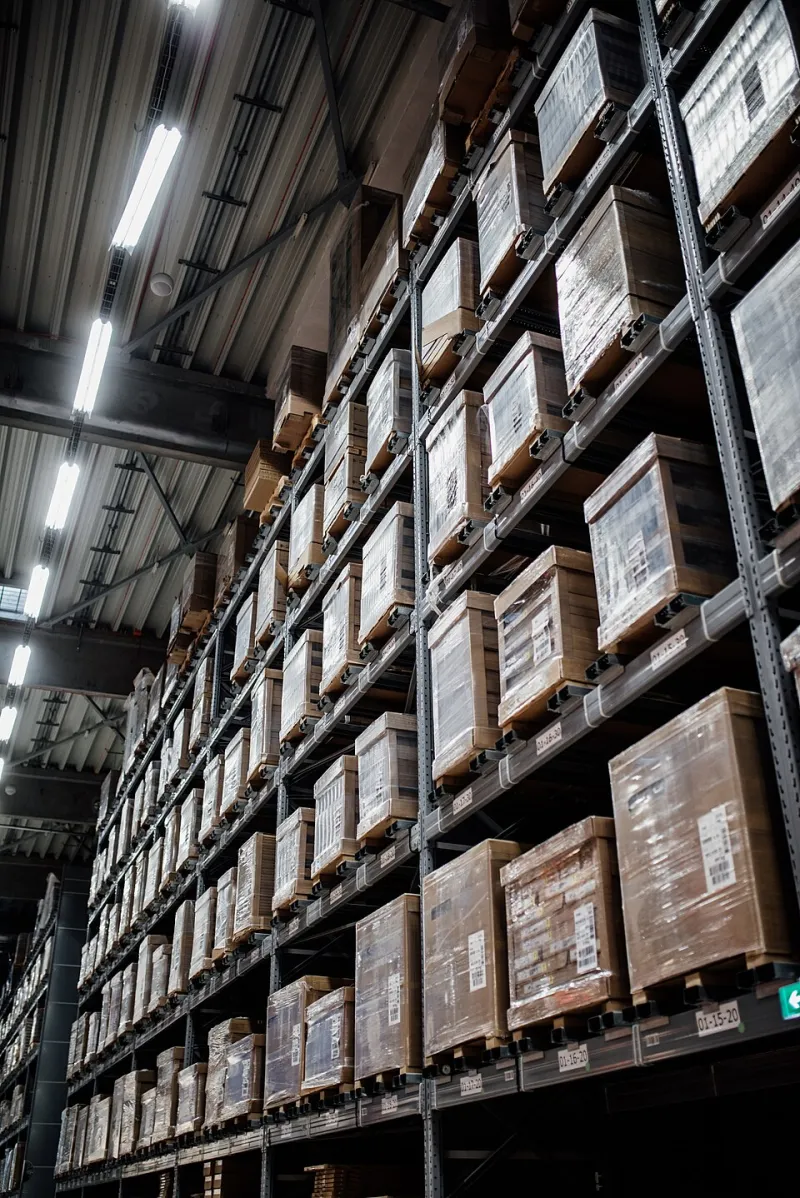
Photo: Shixart1985, CC BY 2.0, via Wikimedia Commons
When a Japanese manufacturer quotes a minimum order quantity, the number on the page is rarely the result of a negotiation opening position. It is, more precisely, the output of a production economics calculation—one that accounts for line changeover time, batch setup costs, material procurement commitments, and the supplier's own obligations to their upstream partners. Understanding this distinction is the starting point for any US importer who wants to engage intelligently with MOQ constraints rather than simply absorbing their cost.
For large-volume importers, the MOQ is often a non-issue. Their order quantities exceed the minimum, and the supplier's production logic aligns with their commercial requirements. For mid-sized and smaller US importers—a segment that represents a substantial portion of the businesses sourcing from Japan—the MOQ frequently represents a volume commitment that exceeds their actual demand. The difference between what they need and what they must order does not disappear. It becomes inventory, and inventory has a cost.
The Factory Economics Behind the Number
Japanese manufacturing, particularly in precision components, specialty materials, and engineered goods, is organized around production runs that optimize for efficiency at scale. A factory producing injection-molded components, for example, incurs a fixed setup cost each time a mold is mounted, calibrated, and test-run. That cost is amortized across the production run. A run of 500 units carries a dramatically higher per-unit setup cost than a run of 5,000 units—and the supplier's MOQ is typically set at the point where the per-unit economics become acceptable to both parties.
This logic extends upstream. Japanese suppliers frequently hold material purchase commitments with their own raw material providers, and those commitments are structured around minimum volumes. A supplier who agrees to produce 200 units for a US importer when their material commitment requires them to purchase inputs for 1,000 units will either absorb the excess material cost or decline the order. The MOQ, in this context, is not a negotiating posture. It is a pass-through of structural cost.
Keiretsu relationships—the long-term, loyalty-based supplier networks that characterize much of Japanese manufacturing—add another layer. A Japanese manufacturer who has maintained a 20-year relationship with a material supplier is unlikely to restructure that relationship to accommodate a smaller foreign customer's volume preference. The MOQ reflects, in part, the volume floor that preserves those upstream relationships.
The True Cost of Carrying Excess Inventory
US importers who accept MOQs above their demand requirements often treat the excess inventory as a cost of doing business—a line item that is acknowledged but not fully scrutinized. A more rigorous analysis typically reveals that the cost is higher than it appears.
Carrying costs for US warehouse inventory are conventionally estimated at 20 to 30 percent of inventory value per year, a figure that includes warehousing, insurance, financing, and handling. For a US importer who orders 3,000 units at a $40 per-unit cost to meet a supplier's MOQ when their actual demand is 1,800 units, the excess 1,200 units represent $48,000 in inventory that was not commercially required. At a 25 percent annual carrying cost, that excess inventory costs approximately $12,000 per year to hold—before accounting for the opportunity cost of the capital deployed.
Obsolescence risk compounds the calculation. In product categories subject to design cycles, regulatory changes, or technology evolution, inventory held beyond demand has a measurable probability of partial or total write-down. A component that is superseded by a design revision six months into its holding period does not recover its carrying cost—it becomes a direct loss. For importers sourcing from Japan in categories with active product development cycles, the MOQ-driven inventory surplus is not just an efficiency problem. It is a balance sheet risk.
Consolidation Strategies That Work
Several approaches have demonstrated practical effectiveness for US importers navigating MOQ constraints without simply accepting the inventory burden.
Demand Aggregation Across SKUs. For importers sourcing multiple related products from the same Japanese supplier, MOQ requirements may be negotiable at the product family level rather than the individual SKU level. A supplier who requires a minimum run of 2,000 units per SKU may accept a combined order of 2,000 units distributed across three variants, provided the production economics are compatible. This requires a clear understanding of the supplier's actual constraint—setup cost, material commitment, or line scheduling—and a proposal that addresses that constraint directly.
Importer Consortia and Group Purchasing. Smaller US importers sourcing similar components from the same Japanese suppliers have, in some cases, formed informal purchasing consortia to aggregate demand and meet MOQ thresholds collectively. This model is operationally complex and requires careful management of competitive sensitivities, but it is commercially viable for non-competing businesses in adjacent sectors.
Scheduled Release Orders. Some Japanese suppliers will accept a blanket purchase order covering a full MOQ volume with a scheduled release structure—meaning the importer commits to the full quantity but takes delivery in smaller tranches over a defined period. This approach preserves the supplier's production economics while reducing the importer's peak inventory exposure. Not all suppliers will accommodate this structure, but it is worth proposing explicitly, particularly within established relationships.
Nearshoring as a Partial Offset. For certain product categories, the MOQ-driven inventory cost of Japanese sourcing can be partially offset by nearshoring a portion of the supply base to Mexico or other Western Hemisphere locations. Near-shore suppliers in many categories offer more flexible MOQ structures, though typically at a higher per-unit cost and with different quality and capability profiles. The trade-off is not always favorable, but it is worth modeling explicitly against the carrying cost of Japanese-sourced excess inventory.
Rethinking the MOQ in Your Supplier Evaluation Framework
MOQ is a supplier attribute that US importers routinely collect during the sourcing process and rarely analyze with the same rigor applied to unit price or lead time. That oversight is increasingly costly in a 2025 environment characterized by elevated financing costs, tighter warehouse capacity, and accelerating product development cycles.
A supplier's MOQ should be modeled as a total cost variable, not a binary constraint. For each Japanese supplier relationship, the relevant question is not simply whether you can meet the MOQ—it is what the full cost of meeting it is, including carrying costs, obsolescence risk, capital opportunity cost, and the operational overhead of managing excess inventory. That cost, expressed as a per-unit or per-year figure, belongs in the same analysis as tariffs, freight, and currency exposure.
Japanese manufacturing offers a range of capabilities that remain difficult to replicate elsewhere. The MOQ structures that accompany those capabilities are a real and calculable cost. Importers who quantify that cost accurately will make better sourcing decisions—and will be better positioned to negotiate, consolidate, or restructure supplier relationships in ways that preserve the quality advantages of Japanese sourcing without absorbing its volume penalties.