Packaged for Tokyo, Stranded in Long Beach: The True Cost of Japanese Export Packaging
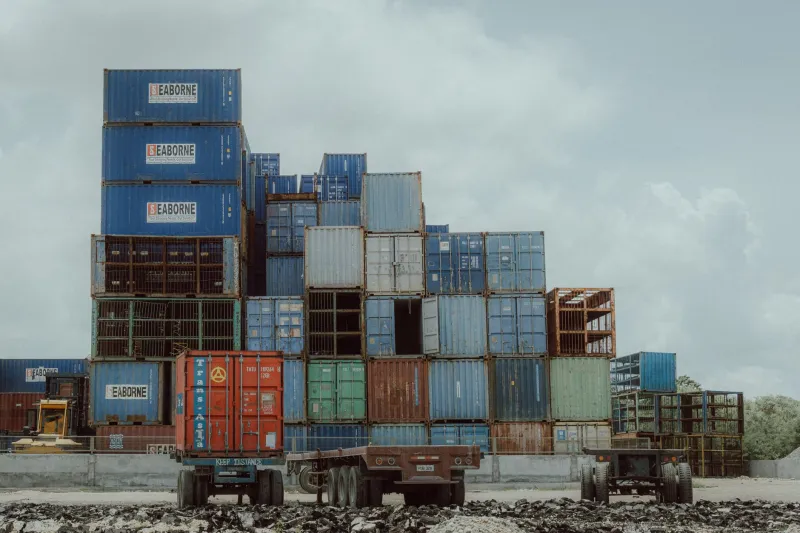
When supply chain managers calculate landed costs for Japanese imports, they typically account for ocean freight, customs duties, and inland transportation. What rarely appears in those spreadsheets is a line item that experienced importers have come to dread: the compounding expense of packaging that was never designed for the American logistics environment.
Japanese suppliers, particularly those whose primary customer base remains domestic, default to packaging specifications shaped by Japan's own distribution infrastructure. That infrastructure is meticulous, space-conscious, and optimized for a retail and wholesale network that operates very differently from anything you will encounter between Long Beach and Louisville. The result is a predictable collision between Japanese packaging conventions and US port operations — one that generates real costs that most procurement teams discover too late.
Why Japanese Domestic Packaging Standards Don't Travel Well
Japan's domestic supply chain is built around frequent, small-lot deliveries to densely located customers. Packaging reflects this reality. Units are often wrapped in ways that maximize protection during short-haul trucking on well-maintained roads, stacked in configurations suited to Japanese pallet dimensions (which differ from the standard 48" x 40" GMA pallets dominant in the US), and labeled according to JIS standards that have no direct equivalence in American warehousing systems.
When those same packaging specifications are applied to export containers bound for the US, several problems emerge simultaneously. First, the pallet incompatibility issue: Japanese suppliers frequently use 1,100mm x 1,100mm pallets. When these are loaded into a 40-foot high-cube container, the dimensional mismatch creates unused floor space that you are still paying to ship. Container utilization rates that should approach 85–90% often fall to 65–70%, meaning you are effectively paying for dead air on every voyage.
Second, unit-level packaging is frequently over-engineered for transit conditions that don't apply to ocean freight. Products packaged for Japan's express parcel networks may include multiple layers of cushioning, individual retail-ready presentation boxes, and shrink-wrapping that adds both weight and cubic volume without adding any meaningful protection during container shipping. You pay for that extra weight and volume in your freight rate, and then you often pay again to remove it before goods can enter your distribution center.
The Port Charges Nobody Budgets For
The packaging mismatch doesn't just inflate your freight cost — it creates a chain of secondary charges that materialize after the vessel arrives.
Demurrage is perhaps the most immediate concern. When cargo arrives packaged in a format that your US warehouse or 3PL cannot efficiently process, dwell time increases. Containers that should be unloaded, inspected, and returned within the free-time window instead sit at the terminal while logistics teams scramble to arrange repackaging, additional labor, or specialized equipment. At major West Coast ports, demurrage charges currently range from $150 to $450 per container per day after the free period expires. A shipment that requires even three additional days of terminal dwell time can generate $1,000 or more in charges that appear nowhere in the original cost model.
Repackaging fees compound the problem. Many US distribution centers and 3PL providers charge handling surcharges for freight that arrives on non-standard pallets or in configurations that cannot be processed through standard receiving workflows. These fees vary widely — from $50 to $200 per pallet or more — but they are consistent enough that experienced importers build them into their Japan sourcing cost models as a routine line item.
There is also a subtler cost that is harder to quantify but equally real: labor inefficiency. Receiving teams accustomed to standardized US packaging spend significantly more time processing Japanese export shipments. In a labor market where warehouse wages have risen sharply in recent years, that inefficiency translates directly into operating cost.
A Cost Scenario Worth Running
Consider a mid-volume importer bringing in 10 containers of industrial components from a Japanese manufacturer on a quarterly basis. If each container arrives at 68% utilization due to pallet dimension mismatches, the importer is effectively wasting roughly 13 cubic meters of paid container space per shipment. At current NVOCC rates on the Japan–US West Coast trade lane, that unused space represents several hundred dollars per container in pure inefficiency.
Add two days of demurrage per container at $250 per day, repackaging fees of $75 per pallet across an average of 18 pallets per container, and the incremental labor cost of non-standard receiving. Across 40 containers annually, the total packaging-related cost premium can easily reach $80,000 to $120,000 — a figure that would meaningfully alter the sourcing decision if it had been visible at the procurement stage.
Negotiating Packaging Without Losing Product Protection
The good news is that Japanese suppliers, despite their attachment to domestic specifications, are often more flexible on export packaging than initial conversations suggest. The key is approaching the conversation with specificity rather than vague requests to "simplify" packaging.
Specify pallet dimensions in the purchase agreement. Explicitly requiring GMA-standard 48" x 40" pallets in your supplier contracts eliminates the most significant source of container inefficiency. Many Japanese exporters can accommodate this request, particularly if you are placing consistent volume orders. Frame it as a mutual benefit: better container utilization reduces the number of shipments required over time.
Request export-specific packaging assessments. Ask your supplier to distinguish between packaging requirements for domestic distribution and those genuinely necessary for ocean container transit. A third-party packaging engineer or your freight forwarder can assist with this analysis. Products that travel in a sealed container do not need the same protective packaging as products moving through Japan's parcel delivery network.
Negotiate repackaging cost-sharing at origin. In some cases, it is more economical to have repackaging performed at the origin warehouse in Japan, where labor costs and the supplier's familiarity with the product make the process faster and safer. If your supplier resists absorbing this cost, consider proposing a shared-cost arrangement that still results in net savings once US-side charges are eliminated.
Build packaging specifications into RFQ documentation. The most effective intervention is also the earliest one. When issuing requests for quotation to Japanese suppliers, include explicit packaging and palletization requirements alongside product specifications. Suppliers who cannot or will not meet these requirements are surfacing an important operational incompatibility before it becomes a recurring cost.
The Procurement Discipline That Prevents Port Surprises
Packaging is rarely glamorous procurement work, but it is consequential work. For US companies sourcing from Japan, the gap between a supplier's domestic packaging defaults and the requirements of American logistics infrastructure is wide enough to meaningfully erode the cost advantages that made Japan sourcing attractive in the first place.
The importers who manage this most effectively treat packaging specifications with the same rigor they apply to product specifications. They document requirements, negotiate terms, audit compliance on initial shipments, and hold suppliers accountable when configurations drift back toward domestic defaults.
Japan remains a premier source for precision-manufactured goods, and that position is unlikely to change. But capturing the full value of a Japanese supply chain relationship requires looking past the product itself to the entire journey from the supplier's dock to your distribution center floor. Packaging is where that journey frequently goes wrong — and where disciplined procurement teams find meaningful, recoverable cost.


