The Missing Leg: Why Factory-to-Port Trucking Is Now a Planning Variable
A Japan-origin shipment is usually managed as an ocean move with an inland tail. The buyer watches vessel schedules, port cutoffs, and US delivery appointments. The leg that receives less attention is the one at the front: the truck pickup from the Japanese factory to a consolidation center, container yard, or port terminal. As of November 2026, that leg deserves its own place in landed-cost and replenishment planning.
The Leg You Do Not See on the Ocean Bill of Lading
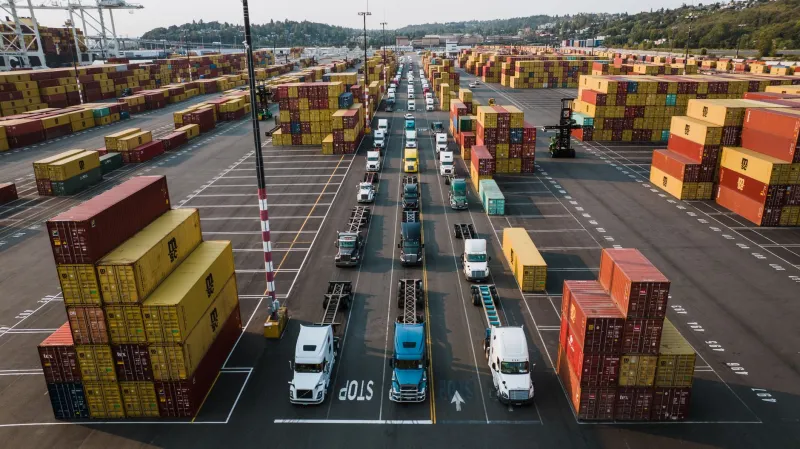
For many US importers, the shipment begins when the container is loaded at the Japanese port. In reality, it begins when a truck arrives at the supplier's dock. The cargo may move to a consolidation warehouse, a container freight station, or directly to the terminal. Each handoff has an appointment window, a cutoff time, and a cost structure. When those steps run late, the ocean booking can be missed even though the vessel was never the problem.
Japan's domestic haulage market is also fragmented. A supplier may use a familiar local carrier, while the forwarder may nominate a different carrier for the port leg. Responsibility for booking the truck, paying the pickup charge, and managing the appointment can vary by supplier and by contract. That ambiguity becomes costly when capacity is tight.
Why Pickup Schedules Are Tightening
The trucking leg is being reshaped by driver capacity. Japan's overtime rules for truck drivers have tightened in recent years, reducing the flexibility that carriers once used to absorb peak volumes, long waits, and early-morning pickups. The driver workforce is also aging, and younger drivers are not entering the profession quickly enough to replace retirements. The result is a market with less slack.
For exporters, less slack means pickup appointments are harder to secure, especially at short notice. Carriers may decline jobs that require long waiting times at factory docks or terminal gates. Consolidation schedules become less forgiving. Surcharges for evening, weekend, or urgent pickups can appear. None of these costs is necessarily unreasonable, but each one changes the true cost of getting goods from the factory to the vessel.
Warning Signs in Your Supplier's Pickup Calendar
US buyers should watch for changes in the supplier's pickup lead time. If the supplier once booked a truck with two days' notice and now asks for four or five, that is a signal. If consolidation cutoffs are moving earlier, or if the supplier starts splitting shipments to meet carrier availability, the front end of the supply chain is tightening.
Other warning signs include new accessorial charges for waiting time, a shift from standard trailers to smaller vehicles, requests to adjust factory loading hours, and an increase in the number of days between production completion and port departure. Each signal is small on its own. Together, they suggest that the domestic trucking leg is becoming a constraint rather than a routine step.
Building Buffers Into Landed Cost and Replenishment
Procurement and logistics teams should model the Japan pickup leg explicitly. That means adding origin dwell time between factory readiness and vessel departure, not just ocean transit time. It means building a buffer for appointment delays and consolidation cutoffs. It means asking the forwarder to quote pickup and origin handling separately so the buyer can see what is being paid for.
For critical replenishment, buyers should consider alternate consolidation points or ports where trucking capacity is more reliable. They should review whether a slightly higher freight rate for a more predictable pickup is cheaper than expediting a missed sailing. They should also update safety stock assumptions when pickup lead times lengthen. A one-week increase in origin dwell can be as damaging to availability as a one-week increase in ocean transit.
Questions for Suppliers and Forwarders
Ask who books the domestic truck and who pays for it. Ask what pickup lead time the carrier requires and whether that has changed in the past year. Ask which charges are included in the quoted freight rate and which are billed as accessorials. Ask what happens if the factory is not ready at the appointed time. Ask how the supplier and forwarder coordinate when a vessel cutoff moves. Finally, ask for a contingency plan when the nominated carrier cannot cover the pickup.
The factory-to-port trucking leg is not glamorous, but it is where schedule reliability is often won or lost. US importers that treat it as a planning variable rather than an invisible assumption will have a more realistic view of landed cost and a better chance of keeping replenishment on track.