One Container, Several Masters: The Real Math Behind Consolidating Japanese Suppliers
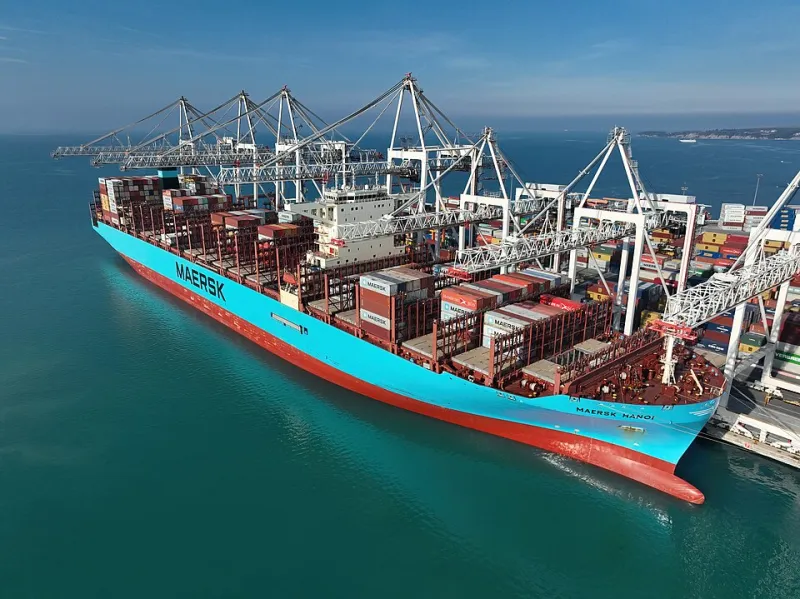
Photo: Petar Milošević, CC BY-SA 4.0, via Wikimedia Commons
Consolidation is the most emotionally satisfying line item in a freight budget. Three suppliers, three small shipments, one container, and a rate per cubic meter that falls by a third. Procurement books the savings. The container sails. Then the demurrage invoice arrives, one supplier's cargo is held for a customs exam, and the receiving team discovers it has three arrival dates disguised as one.
This is not an argument against consolidation. It is an argument for pricing it correctly, because the rate benefit is real and visible while the transferred risk is real and invisible.
What a consolidated container actually changes
When you consolidate, you do not merely combine freight. You combine legal and operational clocks that belong to different companies.
Each Japanese supplier files its own export declaration. Each one has its own seal authority, its own shipping department calendar, and its own view of what a reasonable cutoff means. The forwarder or NVOCC then becomes the shipper on the master bill of lading, which means your visibility into the container is mediated by a third party who is not contractually loyal to any individual supplier.
Your Incoterms almost certainly do not match. One supplier sells FCA Nagoya, another FOB Tokyo, a third CIF Kobe. Under CIF, the supplier selects and pays for the ocean leg, which may or may not be the container you chartered. Under FCA, your risk transfers at the supplier's dock, long before consolidation occurs. The moment you pool cargo under mixed terms, you have to answer a question nobody wrote into the contract: whose insurance responds to damage that occurred inside a shared container, after the point of transfer but before arrival?
Then there is the Importer Security Filing. A consolidated booking may mean multiple manufacturers on one filing, and a single late correction by any one supplier can put the whole filing out of tolerance. CBP does not care that only one of the three suppliers was late.
The four costs that never appear on the quote
The cutoff ratchet. The container ships when the last supplier is ready, not when the average supplier is ready. Practically, every supplier must hold inventory longer than its own production cycle requires, or every supplier must be pushed to a date none of them chose. Either way, someone is carrying inventory they did not budget for.
The shared fate penalty. One container means one customs exam decision. A CBP hold, an agricultural inspection, or an intellectual property query on one supplier's line item freezes all three suppliers' goods, plus your detention clock.
The documentation multiplier. One consolidation does not produce one document set. It produces three invoices, three packing lists, three export declarations, and a house bill of lading for each, plus a master bill on top. Add the reconciliation labor at your broker and you have consumed a meaningful share of the freight saving before the vessel departs.
The attribution problem. If a pallet arrives crushed, the carrier will point to the loading plan, the forwarder will point to the supplier, and the supplier will point to the container yard. In a dedicated container, the chain of custody is short and the claim is defensible. In a pooled container, it is neither.
A decision framework
Use these six signals. Consolidate only when at least four point in the same direction.
| Signal | Favors consolidation | Favors separate shipments |
|---|---|---|
| Volume | Combined volume reliably fills a 40HQ or better | Combined volume lands near an LCL break-even |
| Delivery windows | All suppliers can hit the same cutoff with no expediting | Readiness spread exceeds two weeks |
| Incoterms | Uniform terms, or you control the ocean leg for all | Mixed CIF, DAP, and FOB across suppliers |
| Document maturity | All suppliers issue documents electronically and on time | Any supplier has a history of late originals |
| Compliance profile | Low duty, low PGA involvement, no prior exams | Regulated goods, prior holds, or new suppliers |
| Inventory tolerance | You can absorb a few extra weeks of cycle stock | Cash or warehouse space is tight |
If the readiness spread between your earliest and latest supplier exceeds two weeks, consolidation is already an accounting fiction. You are not combining shipments. You are delaying the early one and gambling on the late one.
Where consolidation genuinely wins
It wins on stable, repeatable lanes with suppliers of similar scale who share an Incoterm and a document culture. It wins when the product is low-risk from a customs standpoint and when your own warehouse can absorb a lumpy receipt. And it wins cleanly when a capable forwarder takes ownership of the whole chain — bookings, declarations, cutoffs, and exception handling — rather than acting as a booking desk for three separate relationships.
The honest test is this: write down the freight saving per container. Then write down the value of one extra week of cycle stock at each supplier, one demurrage event per quarter, and one customs exam that touches all your inbound at once. If the saving survives that arithmetic, consolidate with confidence. If it does not, the container was never the problem — the reflex was.